Gay Travel Index 2026: Where LGBTQ+ Travelers Feel Safest (and Where to Be Careful)
Every year since 2012, the Gay Travel Index gives a snapshot of how safe and welcoming countries are for LGBTQ+ people. And the 2026 rankings are a mix of progress, setbacks, and a reminder that not all “safe” destinations feel the same on the ground. Here’s what you actually need to know as a queer traveler.

What Is the Gay Travel Index?
Since finding out about the Gay Travel Index, about five years ago, Davey and I religiously look forward to February (when they usually publish the most recent rankings) every year. In short, the Gay Travel Index by Spartacus ranks over 200 countries based on how they treat LGBTQ+ people: legally, socially, and culturally. It looks at things like:
Marriage equality
Anti-discrimination laws
Trans rights and recognition
Criminalisation of LGBTQ+ identities
Social attitudes and safety
What we appreciate about it is that it’s not just about laws. It’s also about lived reality, and that matters because as queer travelers, we feel the difference instantly.
The Safest Countries for LGBTQ+ Travel in 2026
So let’s talk about the safest countries before diving into the sad setbacks. This might come as a surprise to some, but most of these countries have notoriously been in the top rankings for years now, especially Iceland, Malta and Spain. Those three are always fighting for first spot it seems lol. And don’t forget about Canada! They have the most #1 rankings since the inception of the Gay Travel Index than any other country.
The top 10 countries in 2026 are:
Iceland
Malta
Spain
Belgium
Canada
Germany
Portugal
New Zealand
Norway
Switzerland
These are the places where you’re legally protected, you’re unlikely to face discrimination and you can actually relax into your trip. From our experience, having been to most of these countries, we can confirm. We never felt unsafe or othered in any of these destinations, and there’s a beauty in that. In just existing and not being this token gay couple. But if you follow us on social, you know we love Spain and how easy it feels to travel throughout the country.
Countries That Are Improving (and Worth Watching)
One of the most important takeaways this year: things can change quickly! Some countries, that you’d normally never think about, are actively becoming more welcoming:
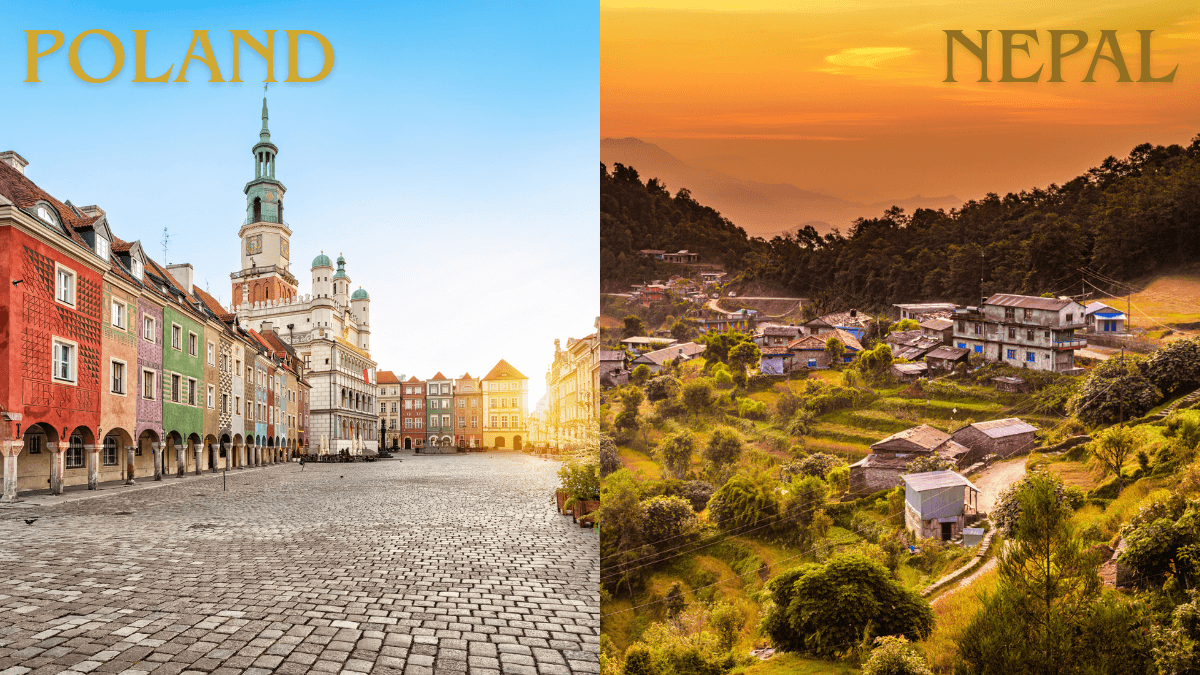
Poland has made major progress after political shifts
Nepal has improved trans rights and legal recognition
Now, these aren’t automatically ‘safe gay-friendly’ destinations, but it’s refreshing to know they are moving in the right direction. Having been to Poland, there is a gay scene that is growing every year. I (Omie) went with a friend years ago and we stumbled upon a few gay bars! The stigma is still there and the local sentiment is not fully accepting (yet), but it was a pleasant surprise. Poland is a beautiful country and the people are genuinely kind. They might not be the warmest, on face value, but they were nothing but welcoming to me. But anyway, it’s beautiful to see these countries become more welcoming, and for travelers, that opens up new possibilities.
PS, if you want to learn more about 1980s communist Poland and what it meant to exist gay during that time, read Swimming in the Dark. It was so insightful and heartbreaking. A gorgeous read!
A Divided Landscape: The United States
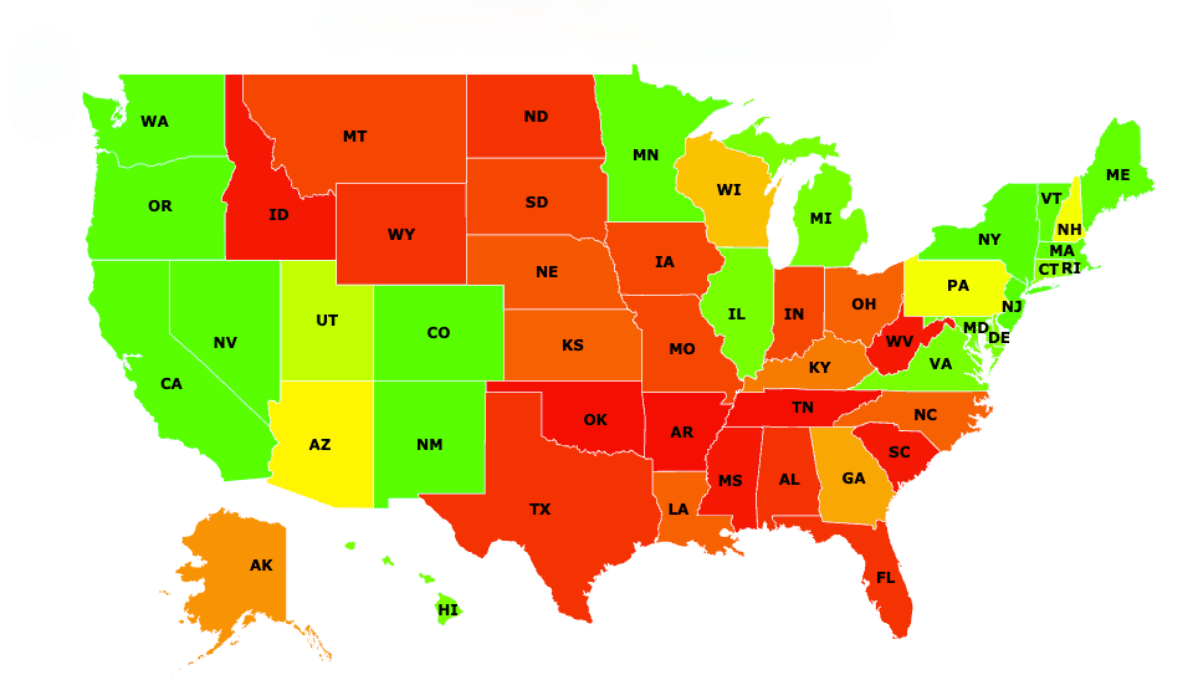
One of the saddest things to see is how much the United States has dropped. Last year, in 2025, it was one of the countries that experienced the sharpest decline since the Gay Travel Index was first introduced in 2012. To put that into perspective, in 2023, the United States ranked 35th. It now sits at 50. That’s beyond shocking, especially for me (Omie) as a Mexican-American. Seeing your own country move backward in such significant ways is difficult. If you’re not from the U.S., you might not realize this, but it has been a deeply divided country for many years. Some states are becoming increasingly anti-LGBTQ+, while others are becoming more welcoming.
The Gay Travel Index also evaluates regions within the United States. Here are some of the safest states for LGBTQ+ people:
California
New York
Washington
Nevada
Illinois (thanks to Chicago)
Colorado
We will say, if you’re planning to travel across the U.S., keep in mind that crossing a state line can completely change your experience. For example, going from California to Wyoming can feel very different. Be mindful of this, or consider sticking to gay-friendly cities we know and trust, like Provincetown, Manhattan, Chicago, San Francisco, Denver, and Los Angeles.
Where LGBTQ+ Travelers Should Be More Cautious
Unfortunately, not everywhere is improving. In fact, some countries are actually moving backwards. Look at what just happened in Senegal. It breaks out hearts, and sadly, it’s happening in more places than we realize.
Some countries have become more dangerous due to:
Increased repression
Anti-LGBTQ+ laws (where same-sex relationships are illegal and public affection can lead to arrest)
Rising violence
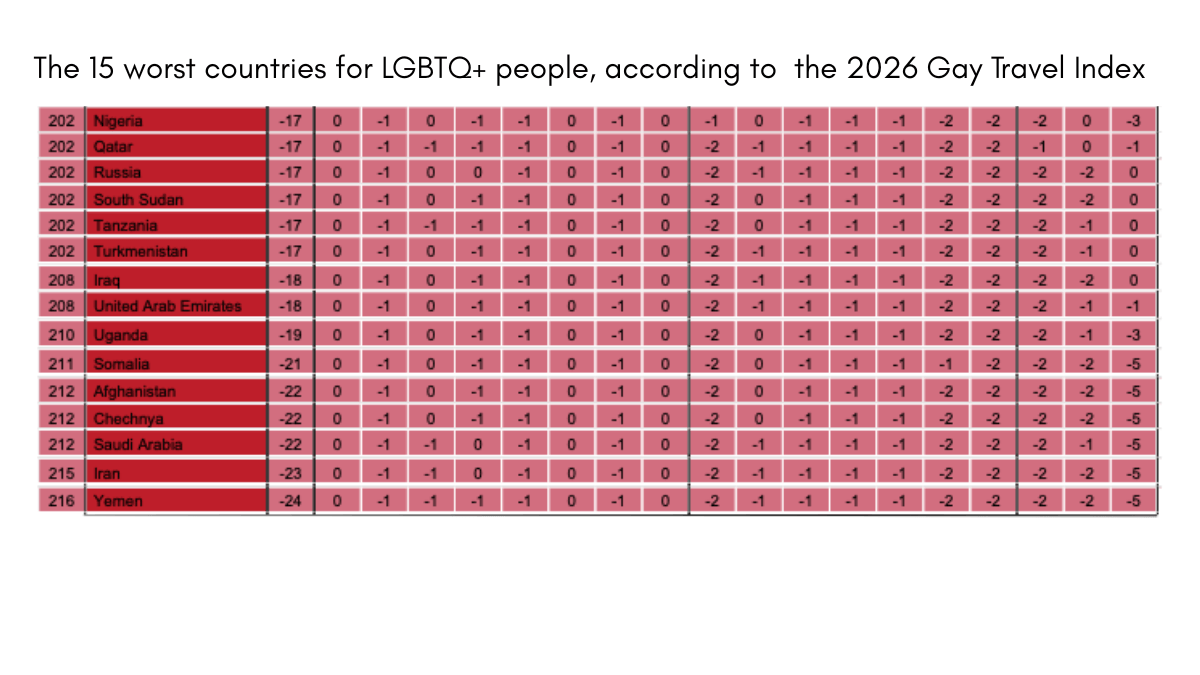
Here are the 15 worst countries for LGBTQ+ people. In these places, queer people can be criminalized, or worse. In some cases, LGBTQ+ people can face the death penalty. Which is just so, so wrong. What are your thoughts on this? Would love to hear from you in the comments below.
The Biggest Shift in 2026: Laws vs Reality
One thing Davey and I talk about a lot is that legal protection doesn’t always equal feeling safe. And that’s the reality of being a gay traveler in 2026; it’s not as black and white as people make it seem. You might find yourself feeling unwelcome in a country where it’s technically legal to be gay. For example, when we went to Bulgaria. It’s legal there, but we felt so uncomfortable and couldn’t wait to leave. You could sense that people didn’t want us there.
On the other hand, we’ve been to countries where the laws condemn us as gay men, but we’ve felt nothing but kindness. Of course, we respected local customs and norms, but not once did we feel unsafe. One place that comes to mind is Marrakech, Morocco. We’ve been twice now, and every time we’ve felt welcomed and treated with genuine kindness. A lot of this comes down to the difference between local sentiment and government policy. Sometimes, you’ll find, that the people don’t reflect their government, just as you might see in places like the United Kingdom or the United States.
That’s why you can’t rely on rankings alone. They’re a helpful tool, but they shouldn’t be your only decision maker. Doing your own research and understanding the local culture is just as important.
How to Actually Use the Gay Travel Index
Instead of treating it like a simple list, use it as a starting point:
Don’t just look at rankings. Read between the lines, research firsthand experiences to learn more. That’s why we share our experiences, so it can help others navigate their travel plans. So don’t forget to follow us (shameless plugin!).
Research specific cities. Big cities are often far more LGBTQ-friendly than rural areas, so you might find yourself wanting to go to a certain country but worried about its laws. Check their bigger cities and they often have some kind of gay scene. For example, Budapest in Hungary or Warsaw in Poland.
Stay updated .Things change quickly, look at the United States! What was safe last year might not be now, so keep updated by following your favorite LGBTQ+ channels.
Balance safety with experience. Some places require more awareness, not total avoidance. If you’re like us and believe that we, too, deserve to see the world, then do your research and remember that it’s not black and white. Ask questions from LGBTQ+ people who have been to said place to see if it’s still a place you’d like to visit.
Trust real experiences. Indexes are helpful, but lived stories matter more. We love, love Reddit for this!

Final Thoughts: Traveling Smart
If there’s one thing the 2026 Gay Travel Index proves, it’s that progress isn’t linear. The places we know today might not be the same tomorrow. Some countries will improve, while others may move backward. That’s why we strongly believe in advocating for LGBTQ+ issues and speaking up whenever we can, even if it’s through something as simple as an Instagram post or Stories. Every bit helps. International pressure can make a difference, even if it doesn’t always lead to immediate change.
Queer people exist everywhere. While these rankings group countries in broad terms, real people are still living their lives within them. Remembering that helps us understand that gay travel isn’t black and white. There are always nuances. In the end, these rankings are helpful. But with the right information and the right mindset, you can still explore the world in a way that is safe, meaningful, and authentic. And that’s what travel should be.
We’d love to hear from you. Have you visited any of the countries mentioned above? Comment below!
As always, happy and safe travels.
Davey and Omie
