

Gay Travel: Is Malta Safe for LGBTQ+ Travelers? What It Feels Like
Malta ranks as one of the most LGBTQ+-friendly countries in the world, so naturally, we expected rainbow flags, a gay district, and queer atmosphere. But what we found instead was something much quieter and far more interesting. As gay travelers, Malta felt welcoming in a way we didn’t expect.
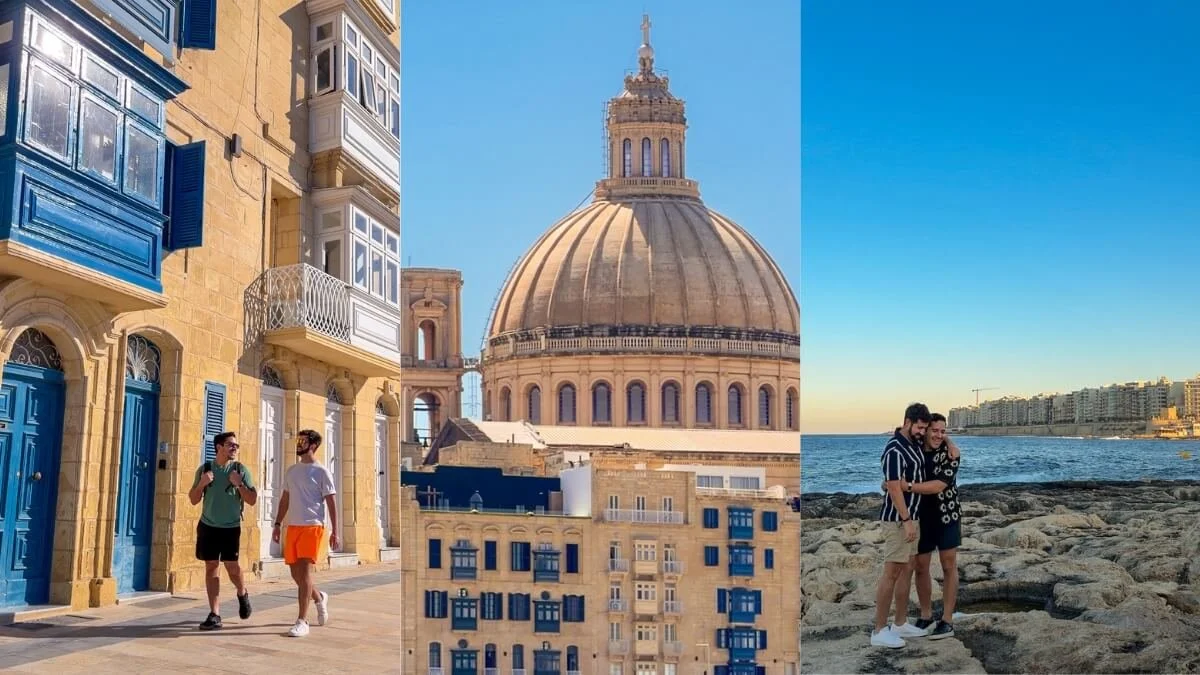
Before visiting Malta this year, we had spent years wanting to go. As gay travelers, Malta had always been on our radar because of its reputation. It held the #1 spot on ILGA-Europe’s Rainbow Map for nearly a decade thanks to its progressive LGBTQ+ protections, same-sex marriage laws, gender identity rights, and more. Not to mention, it was the first country in the EU to ban on conversion therapy! On paper, Malta sounded like one of the most progressive places on Earth for LGBTQ+ people. So naturally, we expected it to feel very… gay.
We imagined rainbow sidewalks, drag queens everywhere, loud queer nightlife, Pride flags hanging from balconies, and some huge bustling gay district by the sea. To be honest, we expected a Mediterranean version of Mykonos, Sitges, or Puerto Vallarta. And then we got there.
At first, we were honestly a little confused, even underwhelmed. Not because Malta felt unsafe, but because outwardly, it didn’t feel particularly queer at all. And weirdly enough, that ended up becoming one of the most interesting things about it.
So, Is Malta Safe for LGBTQ+ Travelers?
Short answer? Yes, but not in the way you’d expect. As a gay couple, we genuinely felt safe throughout our time in Malta. We held hands in public. We explored together freely. We walked through Valletta, Sliema, restaurants, cafés, beaches, and tourist areas without feeling like we had to hide who we were. And, we never saw or personally experienced any homophobia during our trip, which says a lot considering how many gay couples we saw in Malta.
But what made Malta fascinating to us was that the acceptance felt quiet rather than performative. It didn’t feel like a country trying to prove how progressive it was. It simply felt like people were allowed to exist peacefully. And in itself felt refreshing. Davey and I (Omie) have traveled to over 35 countries together, and we’ve experienced firsthand how some destinations market heavily to queer travelers in an attempt to get our pink dollars, not necessarily caring if their country is actually safe for us LGBTQ+ visitors. It can feel like a money grab versus a genuine care for inclusion. Malta felt different from that.
However, the reality is that Malta is still very much a Catholic country. Around 88% of the population identifies as Catholic, and you can absolutely feel traces of that traditional culture in everyday life. They even say this about Malta, that it has more churches than days in a year! Interestingly though, we never felt religion was forced onto us in an oppressive way. It simply felt like part of the country’s identity, and somehow Malta has managed to evolve into one of the most progressive LGBTQ+ countries in Europe while still holding onto that cultural identity, which honestly says a lot about the Maltese people themselves.
Malta Isn’t Loudly Gay, And That’s Okay
This is probably the most important thing we can say if you’re planning a trip. If you are expecting Malta to feel like one giant rainbow-filled gay destination, you may initially feel underwhelmed like we did because Malta’s queer visibility is much quieter than people expect.
There are gay bars. There are queer-owned businesses. There are drag performances, queer events, and LGBTQ+ spaces, but there is not some huge internationally famous gay district or massive queer nightlife scene, which makes total sense. The gay scene is small because Malta is small.
Gay travelers often arrive in Malta expecting an over-the-top gay experience, but it’s worth remembering that Malta is tiny, tiny. The country has a population of around 600,000 people, and once you narrow that down to queer locals, the community is small… So for us, it actually felt remarkable that Malta has a gay scene at all, let alone queer-owned businesses like the ones we were able to find (which we share in our Malta LGBTQ+ Guide).
It’s a small island nation, so naturally its LGBTQ+ scene is going to be much smaller than places like Spain, Greece, or London. We think many travelers accidentally compare Malta to countries and cities that are significantly larger, then feel surprised when the gay scene feels quieter. But quieter does not mean unsafe. In fact, one of the things we appreciated most about Malta was that it didn’t feel like queerness existed solely as a tourist attraction. Acceptance felt more woven into everyday life rather than loudly branded for visitors.
Malta didn’t feel like it was “performing” acceptance. It simply felt accepting.
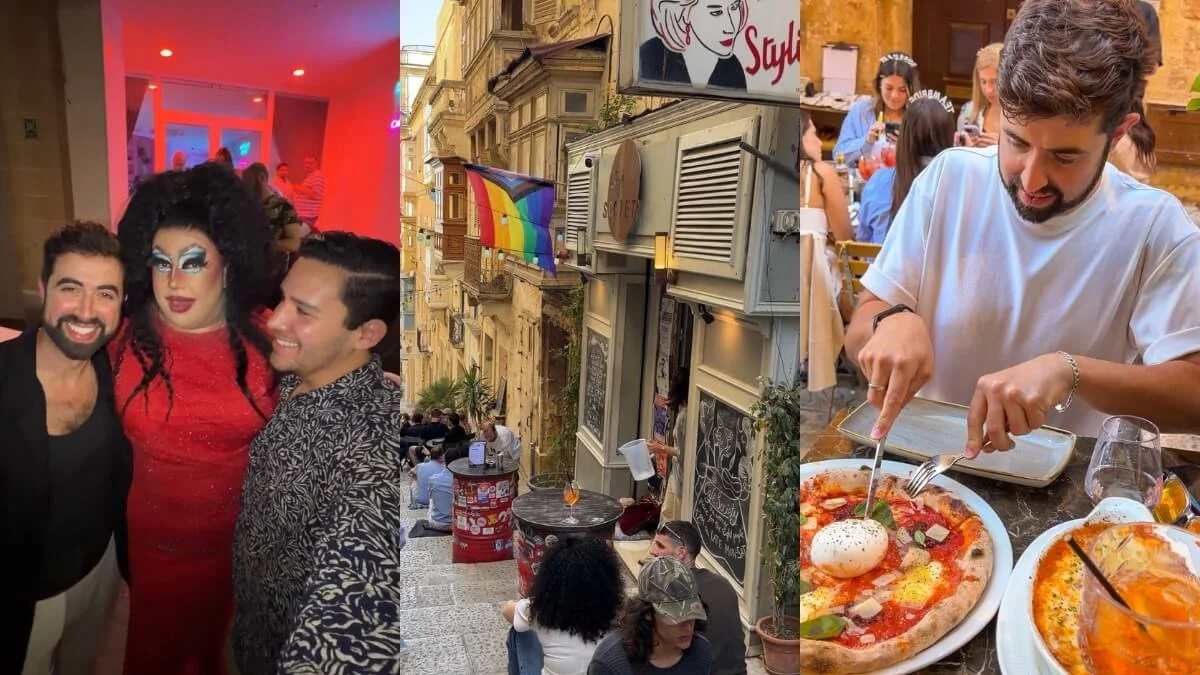
What It Felt Like Holding Hands in Malta
This is one of the biggest questions LGBTQ+ travelers ask before visiting anywhere, and honestly, we completely understand why. As queer travelers, there is a huge emotional difference between technically being safe somewhere and actually feeling comfortable enough to relax.
In Malta, we did feel comfortable enough to hold hands. Particularly in areas like Valletta and Sliema, we genuinely felt relaxed walking around together. Of course, it is still a religious country, but we were affectionate and it never felt like anyone was paying particular attention to us. We existed and that was that.
What we didn’t do, however, was excessive public displays of affection (PDA). Not because we felt afraid, but because Malta still culturally leans conservative and modest overall, so public displays of affection are generally more toned down there for everyone, not just queer couples, which is an important distinction.
We personally would not recommend crazy PDA of any kind in Malta, but we also wouldn’t recommend it for straight couples either. It simply doesn’t align with the local culture. Most of the same-sex couples we saw throughout Malta during our trip seemed to naturally understand that balance as well. People existed openly, comfortably, and respectfully.
The One Area We Felt Slightly More Aware
If there was one place where we felt slightly more aware of ourselves, it was St. Julian’s, specifically Paceville. Interestingly though, it had very little to do with Maltese locals.
St. Julian’s is heavily driven by tourism and nightlife, and when we visited, it was packed with young people (particularly British tourists) drinking in the streets. Because of that atmosphere, we naturally felt a bit more conscious there than we did in quieter areas like Valletta. Even at once point as we were walking to the only gay bar in St. Julian’s, Michelangelo, we had some British guy ask if we wanted to get on his live. He had his phone up in the air as he was live streaming himself and tried pulling us into his video. His shirt also said something about his ‘large package,’ (it was more explicit, but we’ll keep it PG for the sake of this article), so we knew he wanted to make a joke out of it by bringing us gays in. Of course, we didn’t even entertain him and kept walking. Now, we didn’t feel unsafe, but it was uncomfortable and it just confirmed what we felt of St. Julian’s.
And, since we’re being completely honest, St. Julian’s ended up being our biggest regret in Malta. We stayed there thinking it would give us good access to nightlife and convenience, but it just wasn’t the vibe we personally wanted from Malta. When we return to Malta, we will not be staying there again. You couldn’t pay us enough.
Where We’d Recommend LGBTQ+ Travelers Stay in Malta
Valletta: If you want romance, history, beauty, and atmosphere, Valletta is incredible. This is the area we wish we had chosen. The city feels elegant and cinematic, with gorgeous architecture, waterfront views, beautiful restaurants, and a calmer energy overall. It felt far more aligned with the Malta we had imagined emotionally. It also felt incredibly walkable and comfortable as a queer couple.
Sliema: If you want a quieter, safe vibe, then Sliema might be for you. It’s quieter than St. Julian’s, but still very well connected, making it a great base for travelers who want easy access to ferries, restaurants, and nightlife without staying directly inside the party atmosphere. And it is slightly cheaper than Valletta.
St. Julian’s: If nightlife and large hotels are your priority, St. Julian’s may work well for you, but personally, we would not stay there again. We think visiting for a night out is more than enough. Now, if you can find a hotel outside of Paceville, then staying in that area might be good. We just didn’t like the scene nor the traffic, especially when you compare it to other areas to stay in Malta.
Is There a Gay Scene in Malta?
Absolutely! It’s small but the country is small, so it’s not a total shock. It’s definitely more low-key than many travelers expect, but it’s there! We visited several queer-owned and gay-friendly places during our trip and genuinely loved them. Some of our favorites included Sirena, a queer drag bar and café, as well as Café Society, which had a very welcoming queer atmosphere.
We also visited Michelangelo, one of Malta’s best-known gay clubs. The music was great, but it’s definitely more touristy than it is local. We were told by a gay local that Michelangelo is where tourists go and where some Maltese locals go to take people home. So, if that’s your vibe, then have at it! Just make sure to go after 11:30pm because it’s dead otherwise. Trust that we know because we got there at 10:30pm on a Friday night and were the only people there lol.
We will say, what we appreciated most was that Malta gave us balance. During the day, we could immerse ourselves in history, beaches, architecture, and crystal-clear water. Then at night, if we wanted queer spaces, they were there too! It felt like Malta had found its own rhythm instead of trying to imitate another country’s version of LGBTQ+ culture. And we respect that.
One of the Most Meaningful Parts of Our Trip
One of the most emotional moments from our time in Malta actually happened at our hotel. The receptionist upgraded our room, but the only available option had two twin beds. Before we even said anything, she apologized multiple times because she felt genuinely bad she couldn’t give us one bed instead. That small interaction stayed with us because we hadn’t explained our relationship. We hadn’t asked for anything. But it mattered to her that we felt comfortable and welcomed. As gay travelers, moments like that genuinely mean something because they don’t happen everywhere.
We also had the chance to speak with queer locals, including people involved in Malta Prideand queer business owners, about what it actually feels like living in Malta as an LGBTQ+ person. That perspective was incredibly valuable because locals experience a destination very differently from travelers, and what we consistently heard was that Malta’s progress has happened organically and authentically over time, rather than being forced into a particular image. It didn’t follow these Eurocentric standards, but their own. And you can definitely feel that authenticity when you visit.
Practical Advice for LGBTQ+ Travelers Visiting Malta
If you’re planning a trip to Malta, here’s the biggest thing we’d say: Go in with the right expectations. Malta is progressive, welcoming, and safe overall for LGBTQ+ travelers, but it is not a giant rainbow-themed party destination. We came in expecting it to be a certain way and felt underwhelmed but once we adjusted our expectations, we enjoyed and loved our time in Malta.
A few practical things we’d recommend:
Respect local culture and modesty norms
Keep PDA relatively toned down
Support queer-owned businesses when possible (we share them in our guide)
Stay in Valletta or Sliema for a calmer experience
Use Ubers or taxis unless you plan to explore the whole island, then renting a car is worthn it
Don’t underestimate how much there is to see outside nightlife
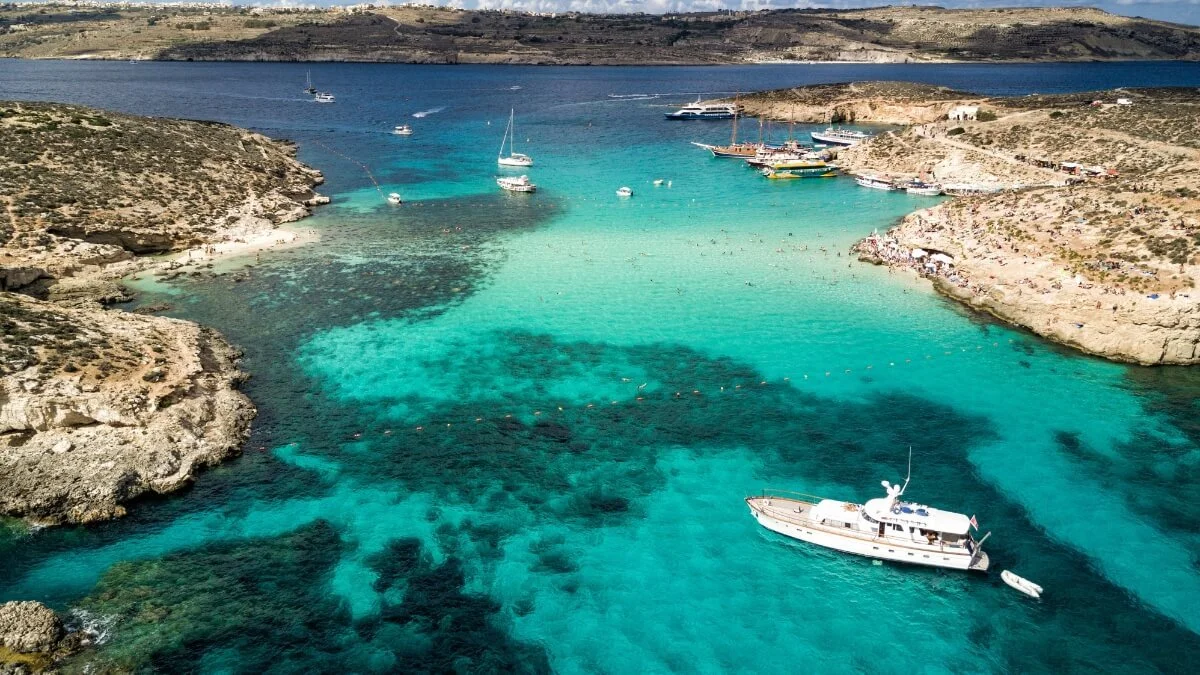
We’d also recommend staying longer than a weekend if possible. Malta surprised us with how much there actually is to do, from beaches and boat tours to historic sites, waterfront cafés, and smaller local towns.
Final Thoughts: Is Malta Worth Visiting for LGBTQ+ Travelers?
Absolutely! Malta may not be loudly queer in the way many travelers imagine, but what we found instead was something quieter, more authentic, and more emotionally relaxing than we expected. We felt safe and welcomed, like we could exist without constantly thinking about ourselves as “the gay couple.” And for queer travelers, that feeling matters more than people realize.
Malta walks the walk rather than simply talking the talk. To go from where it was just 10 years ago to where it is now is remarkable. Just imagine what another 10 years might do to Malta? We think it’ll be even better than now. It might never be a Mykonos or Sitges, but it’s good that it won’t because it’s truly a country with it’s own personality. Once you visit, you’ll understand.
We loved sharing this article with you, and do hope it helped in planning your trip to Malta! If you have any specific questions, please feel free to comment below or find us on social! xx
As always, happy, safe travels!
Davey & Omie
